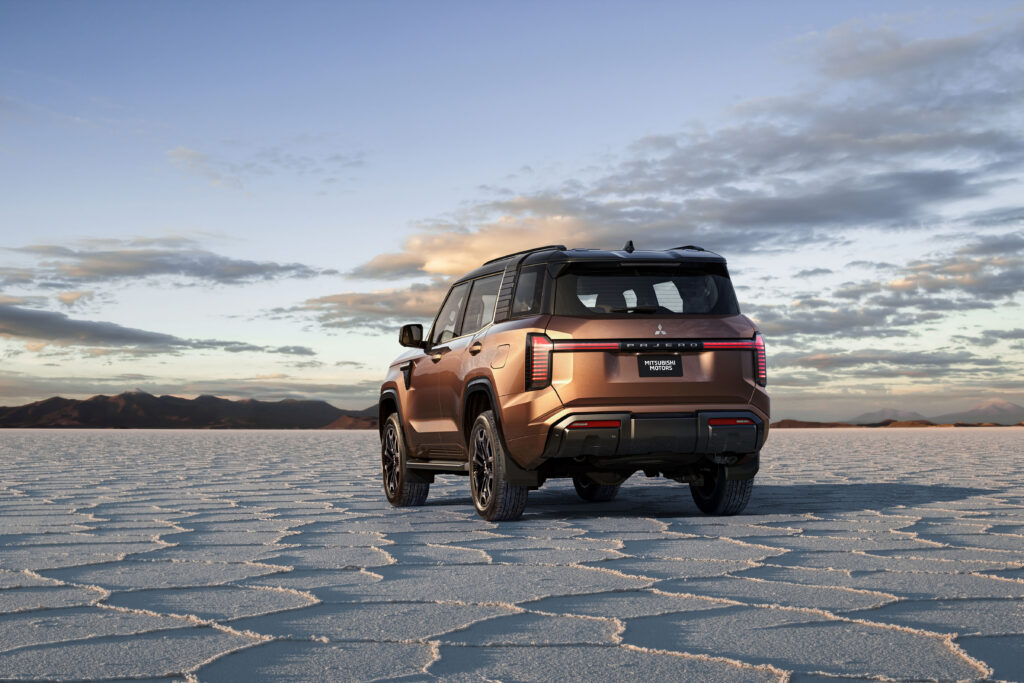
Mitsubishi Motors has unveiled the fifth-generation Pajero, reviving one of the company’s best-known nameplates and positioning the new model as its global flagship SUV. Produced in Thailand, the all-new Pajero will also make Thailand its first sales market before being introduced progressively to other countries.
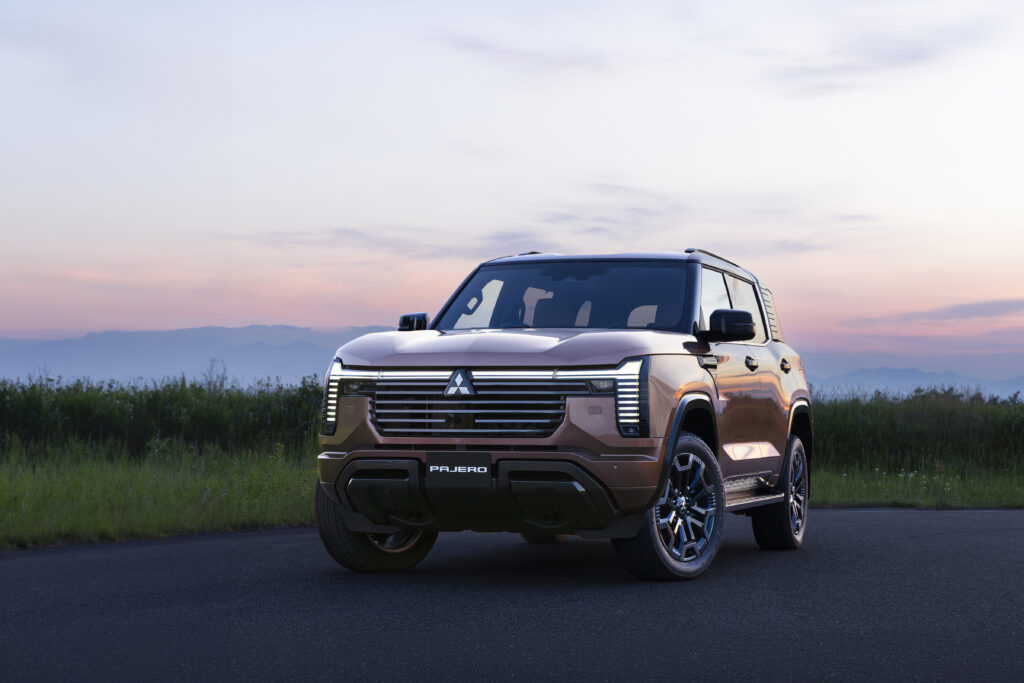
Mitsubishi Motors Corporation unveiled the all-new Mitsubishi Pajero on 2 September 2026, marking the return of the nameplate following the discontinuation of the previous generation in overseas markets in 2021.
The new model represents more than a replacement for an existing SUV within Mitsubishi’s product portfolio. Mitsubishi is positioning the fifth-generation Pajero as a new-generation flagship intended to embody the future direction of the brand, combining the traditional Pajero attributes of off-road capability and durability with substantially higher levels of refinement, technology and comfort.
Thailand will play an especially important role in the new model’s strategy. The all-new Pajero will be manufactured at Mitsubishi Motors’ production base in Thailand, and Thailand is scheduled to become the first market where the vehicle will be commercially launched. Japan and Australia will follow during Mitsubishi’s 2026 fiscal year, with expansion planned to approximately 100 markets—including ASEAN, Latin America and the Middle East—from fiscal 2027 onward.
A return to the Pajero name
The new vehicle is significant because Mitsubishi has revived the Pajero name itself rather than introducing it simply as another generation of the Pajero Sport.
First introduced in 1982, the Pajero developed a strong global reputation as a capable cross-country four-wheel-drive vehicle while offering considerably greater passenger comfort than many traditional off-road vehicles of its era.
Across its first four generations, Mitsubishi reports total Pajero production exceeding 3.29 million units, with the model sold in more than 170 countries and regions. Its reputation was also reinforced through motorsport, most notably its record of 12 victories in the Dakar Rally.
For the fifth generation, Mitsubishi has defined the vehicle around three principles: Confidence, Comfort and Prestige. The addition of Prestige is particularly important, reflecting Mitsubishi’s intention to move the Pajero into a more premium flagship position than before.
Triton-derived architecture, but extensively developed for Pajero
The all-new Pajero uses a highly rigid ladder-frame platform derived from the latest Mitsubishi Triton pickup, although Mitsubishi says the cabin, suspension and vehicle tuning have been specifically developed for the Pajero.
The suspension consists of an independent double-wishbone arrangement at the front and a newly developed five-link rigid axle at the rear. Mitsubishi has placed particular emphasis on balancing off-road wheel articulation and durability with improved ride comfort and stability during long-distance road driving.
Power comes from a specially developed 2.4-litre clean-diesel engine using a variable-geometry turbocharger, producing up to 480 Nm of torque, depending on specification. It is paired with a newly developed eight-speed automatic transmission.
Four-wheel-drive capability remains central to the Pajero’s identity. The model combines Mitsubishi’s Super Select 4WD-II system with Super-All Wheel Control (S-AWC).
Drivers can select between 2H rear-wheel drive, 4H full-time four-wheel drive, 4HLc with the centre differential locked, and 4LLc combining centre-differential lock with low-range gearing.
Seven selectable drive modes—Normal, Eco, Gravel, Snow, Mud, Sand and Rock—further adapt vehicle control systems to different surfaces.
Larger and more premium
The new Pajero measures 4,920 mm long, 1,925 mm wide and up to 1,910 mm high, with a 2,870 mm wheelbase.
Ground clearance is up to 230 mm, while Mitsubishi quotes a 30.4-degree approach angle, 22.6-degree breakover angle and 25.8-degree departure angle for specifications fitted with 20-inch tyres.
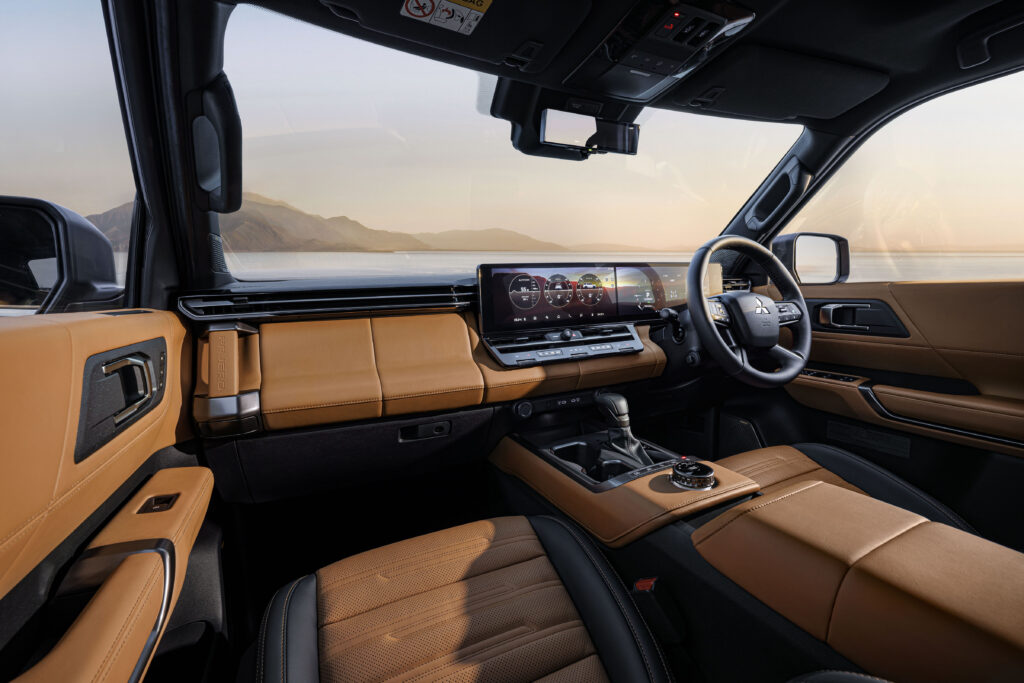
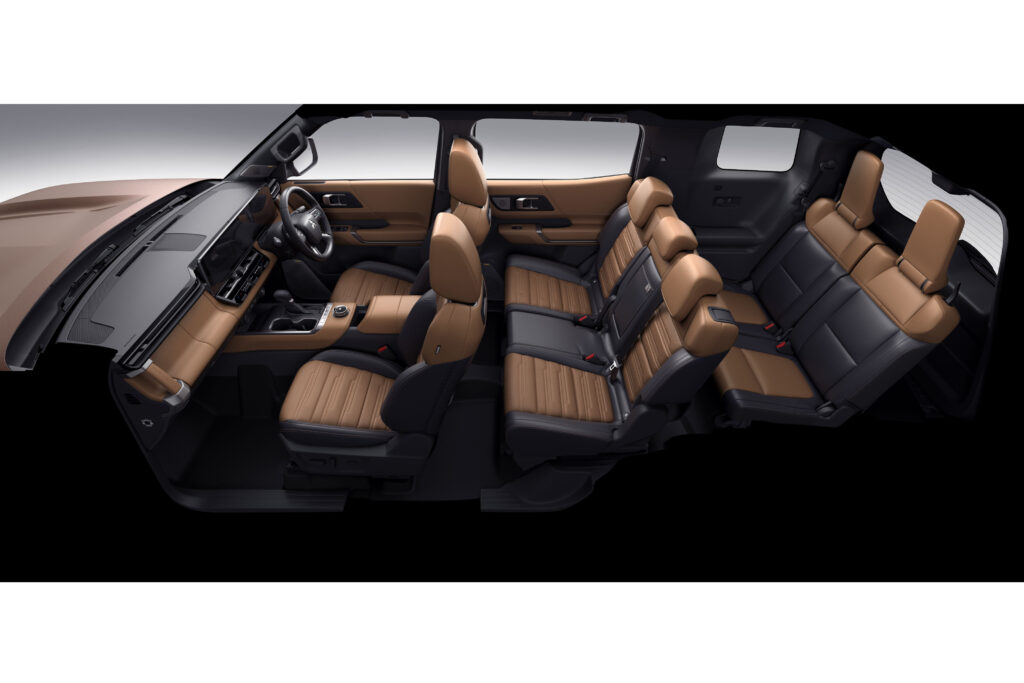
Inside, the Pajero retains a three-row, seven-seat configuration but moves considerably further upmarket.
A prominent feature is a monolithic dashboard display incorporating two screens of up to 14.3 inches. Mitsubishi has also revived one of the Pajero’s traditional cabin signatures—the triple auxiliary gauges—in digital form through its new Multi Meter.
The system can display information including altitude, compass heading, outside temperature, vehicle pitch and roll angles and drivetrain information.
Other available features include three-zone climate control, ventilated seats, a 150-mm sliding second row, a 3D Multi Around Monitor with an under-floor view and a 12-speaker Dynamic Sound Yamaha Ultimate audio system.
Safety and driver-assistance equipment has also been expanded significantly. Depending on specification, the Pajero includes eight airbags, adaptive cruise control, lane-keeping assistance, Forward Collision Mitigation and Mitsubishi’s MI-PILOT highway driving-assistance system.
Implications for the Thai SUV market
The return of the Pajero is particularly noteworthy for Thailand because Mitsubishi is using the country not only as its manufacturing base but also as the model’s first commercial market.
Its positioning could also create an interesting new tier within Thailand’s ladder-frame SUV market.
The existing Pajero Sport competes primarily against models such as the Toyota Fortuner, Ford Everest and Isuzu MU-X. The new Pajero’s flagship positioning, larger dimensions, more sophisticated four-wheel-drive technology and substantially upgraded interior suggest Mitsubishi intends to reach above the conventional PPV segment rather than simply replace the Pajero Sport.
Local pricing will therefore be one of the most important factors to watch when Thai-market specifications are announced.
A competitive price could give Mitsubishi an unusual opportunity to occupy the space between high-specification Thai-built PPVs and considerably more expensive imported large SUVs such as Toyota’s Land Cruiser.
It also gives Mitsubishi something increasingly rare among Japanese manufacturers in Thailand: a genuinely new flagship product with Thailand at the centre of both its production and global export strategy.
Thailand launch next
Mitsubishi has not yet announced official Thai pricing or the complete local model range. The manufacturer is currently accepting registrations from Thai customers interested in receiving launch updates, while local automotive media report that the formal Thai-market introduction is expected around mid-October 2026.
For Mitsubishi Motors, the Pajero revival carries considerably more significance than another new-model introduction. It brings back one of the company’s strongest global nameplates at a time when established Japanese manufacturers face growing competition in Thailand and across ASEAN.
Whether the new Pajero can translate that heritage into meaningful volume will ultimately depend on pricing and market positioning. But strategically, its return gives Mitsubishi a flagship around which it can once again build a stronger SUV identity.